The potential of Neubie proven in Neom City
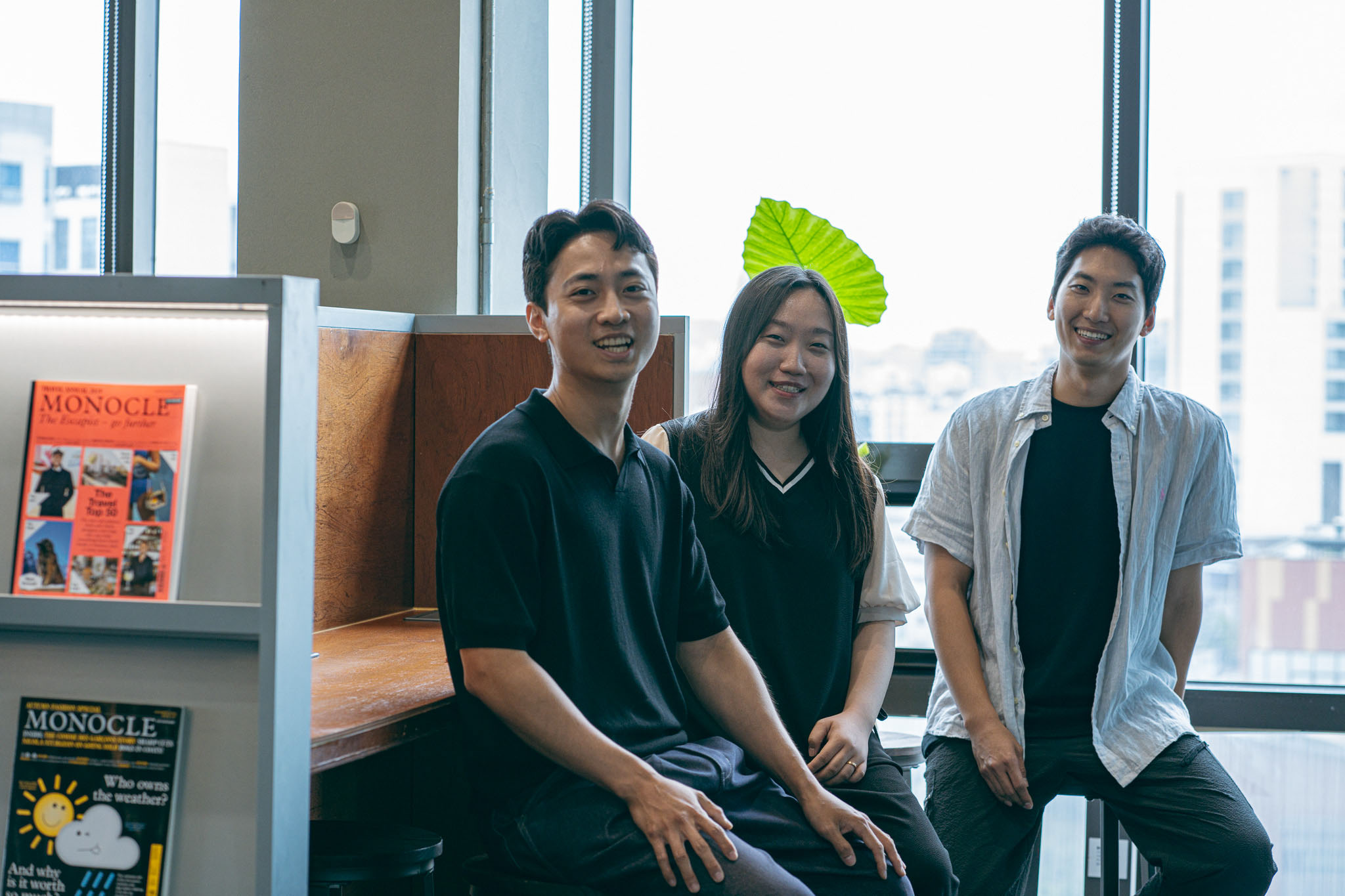
Jiwon Shin (Site Operation Lead) & Wanhee Park (Product Owner) & Geonsu Nam (Robot Field)
🎙️ There is a new city construction plan that is attracting global attention.
It is the smart city construction plan in Saudi Arabia, named 'Neom City.'
Neubility was selected for the last-mile delivery robot sector for this futuristic city construction and has conducted a pilot project.
Among the many competing companies invited, only Neubility successfully established the delivery service and returned, opening up more opportunities for overseas business.
How were Neubility's team members able to successfully establish the delivery service in the challenging environment of Saudi Arabia?
We met with the key team members from Neubility who participated in the Neom project.
✏️ Here’s what you can discover in Jiwon, Wanhee, Geonsu's interview:
- The roles of Neubility's Operations Team, Product Team, and Field Engineers
- Neubility's involvement in the ambitious future city project, 'Neom City' in Saudi Arabia
- The key to Neubility team members' success in delivering services at the Neom City Oxagon site
Q. Hello. We have three people here to introduce the Neom City project.
Could you briefly introduce yourselves and share how you became involved
with Neubility?
Jiwon : Hello, I'm Jiwon, the lead of the Operations Team. Our team is responsible for setting up and ensuring the smooth operation of the service at sites where there is an interest in adopting it.
Previously, I worked in the operations team of a company that provided lunch subscription and delivery services. While working with rider companies, I realized that delivery fees were a significant burden for consumers. With labor costs increasing, I recognized the need for a fundamental solution. While searching for alternatives, I came across a video by Neubility's CEO and became curious about their vision of autonomous robot delivery. I sent an email asking how I could join the operations team, and that led to my joining the company.

Jiwon Shin (Site Operation Lead)
Wanhee : Hello, I'm Wanhee Park, the Product Owner on the Product Team. Our team works on developing the features and services of our product—autonomous technology and delivery robots—so that they can be used by more people in various environments.
I joined Neubility in October 2022. Before joining Neubility, I worked in startups such as Tesla and also started my own business. Through my entrepreneurial experience, I realized the importance of meeting great people. With the goal of being part of a promising company and working with talented people to lead the industry, I decided to join Neubility.

Wanhee Park (Product Owner)
Geonsu : Hello, I'm Geonsu Nam, a Field Engineer at Neubility. My role involves quickly resolving hardware issues that arise with the robots on-site, ensuring that the robot services run smoothly.
I joined Neubility in October 2023, which is more recent than Jiwon and Wanhee. I majored in robotics engineering in university, so I naturally started looking for companies in the robotics field. I had a particular interest in robot hardware-related roles, and that's how I came across Neubility and decided to apply.

Geonsu Nam (Robot Field)
Q. Could you briefly introduce your respective teams?
Jiwon : As I mentioned briefly earlier, our operations team plays a key role in designing service scenarios and routes to ensure smooth and stable service operation at the sites. I believe in the saying, "All answers are in the field." There are always many challenges to address, but our team focuses on finding and solving those problems by being close to the customers and understanding their needs firsthand.
Wanhee : Our product team is relatively new, having been established around the first quarter of this year. When we talk about the robot, we can think of it as having a core structure. For example, there are stages like research, productization, and commercialization. Until last year, we were focused on the research stage, where we worked on commercializing autonomous driving technology and creating systems that allow users to easily control the robot. Since the end of last year, however, we’ve been shifting towards making the product more refined and focusing on commercialization.
This is when we formed a team with a Product Owner (PO), Technical Program Manager (TPM), and Customer Experience (CX) Manager. Through feedback gathered from the CX Manager's communication with the field, we are continuously improving the autonomous driving and platform features. As the team has grown, our members no longer focus solely on one aspect of the product; they’re now involved in hardware, autonomous driving software, and platform development, allowing for broader perspectives in decision-making.
Geonsu : I am part of the robot team, which consists of various cells, including mechanical electronics, firmware, and QC. As a field engineer, our team focuses on quickly resolving hardware issues that arise in the field, ensuring the smooth operation of the robots.
💁♂️ If you're interested in learning more about field engineers,
be sure to check out Hyokwang's interview! (Read the interview ↗)

Q: You three are here to introduce the ‘Neom City’ project led by Saudi Arabia.
Could you share more about the specific mission of the project?
Wanhee : There is a new city called ‘Neom’ that is being actively developed in Saudi Arabia. Within Neom, there are four major cities: ‘Oxagon,’ ‘Sindala,’ ‘Trojena,’ and ‘The Line,’ among other ongoing projects. The first city to be established was Oxagon, where Neubility expanded. Oxagon is like a port and industrial city, similar to Busan in South Korea. Saudi Arabia started with Oxagon and is now planning to expand to other cities based on this strategy.
Being an industrial city, Oxagon hosts logistics teams like the robotics team from the logistics sector and the accelerator team within McLaren Automotive. These two teams collaborated on an investment program, and Neubility was selected for the ‘Smart Locker & Last-Mile Delivery’ category. We participated in this program by addressing three different tasks, starting with offering delivery services to local residents as the first step.


Above: Neubie Order poster attached to a Neom cabin
Below: Neubie on the Neom site
Q. There have been many events targeting foreigners at Neubility, but this seems to
be your first direct involvement in an overseas business venture.
How did you feel when you first heard that this project would take place?
Jiwon : It was a mix of excitement and concern. It was my first time expanding overseas, and Saudi Arabia’s extreme climate posed an unknown challenge for us. I was worried about whether the operation would run smoothly given the unique environment. At the same time, I felt a sense of pride in the company. It was a remarkable opportunity, after all. Since our operations team was required to travel onsite, I was grateful that we were given the chance to be a part of it.
Wanhee : I think what stood out to me the most was how rare of an opportunity it was. While the company does send people on overseas business trips, it was intriguing to be going to Saudi Arabia, a country that felt unfamiliar, rather than an English-speaking country like the U.S. Especially being part of a project that is creating a new city, although challenging, felt like it would be a great experience. I also remember that I had just gotten married at the time, and I vividly recall watching YouTube videos about Neom City with my wife and sharing my excitement about the project.
Geonsu : The first time I heard about the Neom project was during my second interview before joining the company. At that time, I was told that the company was launching its first overseas business, but I never imagined I would be a part of it. (laughs)
Q. It seems that each team had different tasks to prepare for the delivery service in
Saudi Arabia. What were the key challenges for each team?
Jiwon : Since the main role of the operations team is to design and plan routes, our task was to clearly and quickly design the desired scenarios and routes. We focused on preparing to ensure the completeness of the delivery scenarios.
Wanhee : Our primary approach is to use sensor fusion, including GPS, IMU, and wheels, along with camera-based real-time recognition for outdoor driving. (*We only use VSLAM mapping when absolutely necessary.) We combine GPS signals with correction information provided by each country and various types of GPS signals. However, in cases where infrastructure is lacking in foreign countries, we supplement by installing base stations. To ensure Neubie operates well internationally, getting this setup right was crucial. Even though this was the first time we were implementing this overseas service with the base station installation manual, our priority was to address any issues that might affect autonomous driving.
We also built a platform to adapt to environments different from Korea. The order platform, called "Neubie Order," was originally in Korean with prices in won, but we had to convert it to English and use the local currency, Riyals.
Additionally, unlike in Korea, where consumers use KakaoTalk, Saudi Arabia does not. So, we had to build a new app for both consumers and business owners to provide the service. In Korea, for convenience, we didn’t require an app download. Instead, we used a webpage or KakaoTalk notifications to open the Neubie lid. However, in Saudi Arabia, we provided an app where users could track the robot's delivery status, receive push notifications upon arrival, and take action. We managed to complete everything within a month.
Geonsu : Since I went on a business trip 80 days after the service launch, many aspects of the robot hardware and software were already stabilized. The goal at that time was to stabilize the robot delivery service without the need for local staff involvement. My main task was to report on my involvement in the service operations on-site and to identify action items to prevent the same issues from arising in the future.
💁♂️ If you're interested in learning more about the Neubie Order platform,
be sure to check out the Platform team's interview! (Read the interview ↗)

Jiwon : When I went, it was the second visit, but it was the first time for the operations team. Our goal was to complete the route settings within the two weeks we were there, so we worked tirelessly, staying focused on the objective. (laughs) During that time, there were no boundaries between teams—deputy directors, field engineers, and developers all jumped in to help.
The weather there was extremely hot, to the point that it was hard to endure even an hour outside. Whenever it got tough, the staff kept switching shifts, so we didn't realize how much time was passing while we were testing. I vividly remember feeling grateful every time we switched shifts and got to enjoy the air conditioning. During those two weeks, I became really close with the staff.


Team members setting up under the scorching sun
Wanhee : We were passionate, but the people from Neom City also had very high standards. In Korea, when we do a demonstration, usually a senior executive or manager comes, watches the demo a couple of times, and then makes a decision, saying "Let's proceed." But here, the stakeholders were staying with us and testing relentlessly day and night. I think we did the demo more than 10 times.
Every night, we filled out a KPT* report, reflecting on the day. "What went well today, so we should keep doing it; what didn't go well, so we need to improve; what should we try next?" We would open our laptops and hold meetings in the taxi, going back and forth between the hotel and Oxagon, always encouraging each other and laughing to keep going even when it was tough.

A demonstration with local stakeholders
Geonsu : I stayed at the site when it was already relatively stable, so my work-related burden was relatively low. However, the mental burden of working alone in a foreign country for two months was more significant. Communication was also challenging. Fortunately, the foreign employees at the Neon Oxagon Basecamp were very friendly. They were also welcoming towards Koreans and offered a lot of help. There was a buffet restaurant on the camp, and I was the only Korean there. Every time I went to the restaurant, they would ask me to teach them Korean, so I remember everyone greeting me in Korean. I think that kind of interaction gave me strength.

The buffet restaurant inside the Oxagon base camp with a view of the Red Sea
Geonsu : I went on the business trip without any prior experience in international work or travel. So, rather than excitement, I felt more fear. Especially, the timing was during a period when Middle Eastern countries were involved in conflicts and the situation was unstable. However, at the start, my field colleague, who had already been stationed there, gave me a lot of advice about local life. I had a week-long handover period, which allowed me to learn a lot and quickly adapt.
Additionally, when issues arose in Neom, it was early morning in Korea, so there were times when we couldn’t respond immediately. Nevertheless, employees in Korea responded tirelessly day and night, even during those early hours.
Wanhee : I was also going to talk about the time difference. As I mentioned, we did a lot of demonstrations. After each demo, it wasn't just "Well done, that's it!"—there was always feedback, and sometimes there were parts that couldn’t be addressed locally. During the Neom project, I asked for a designated front-end and back-end person for each project.
From that point on, after finishing robot operations in Saudi, while we were sleeping, the team in Seongsu-dong would extract data and train the system, allowing us to improve the driving performance by the next day. It was really an ideal setup, and by working 24 hours between Saudi and Korea, we were able to create great efficiency.

Q: I heard that the autonomous delivery system in Neom City was built in a very short
time. What was the key to this success?
Wanhee : The key was the collaboration of know-how and technical expertise. Every time Neubie enters a new environment, there is a process of quickly learning the data, labeling it, and then retraining the system. However, since this was a new country with unfamiliar sites, the amount of data wasn't very large.
In the autonomous driving team, AI was used to simulate various environments, such as rain or snow, and label and augment the learning data. For example, there were gravel patches on both sides of the road, and the color of the gravel was very similar to that of the road, which caused the robot to occasionally get stuck in the gravel. The robot needed to follow the edges of the road accurately, but the distinction was difficult. By simulating different environments, such as night and rainy conditions, and training the system in these conditions, we were able to set it up much faster.
Wanhee : In the Oxagon dormitory, there were not only employees but also their families. There were grandparents and many children, and I remember they really liked the robots. When the robot would say "Excuse me, coming through" in English, they would sometimes respond or even mimic the robot's voice and play around.
When we first launched the service, customers expressed that it was a much-needed service, and some even said, 'I want to be the first customer!' eagerly placing their orders as if they had been waiting for it. According to one of the part-time workers, before our service started, they used to take phone orders for deliveries, but since there was only one employee, they would close the store and go deliver. When the staff saw our robot, they were thrilled and said it was exactly what they needed. They also gave feedback saying they appreciated the convenience of placing custom orders through the app, like "Please cook it medium rare" or "Can I have a few extra patties?"
Jiwon : There was another company in the region that started the project with the same goal, but they couldn't even begin for almost two years. When they saw how quickly we were able to establish the service, they were really surprised. From what I heard, Neubility was the first to successfully launch and return after stabilizing the service. After we completed our work, I believe all the foreign companies working on similar projects left.
Wanhee : Right. The employee I met at that time was from an American autonomous driving company with many employees from India. They said their company had excellent autonomous vehicles, but they were facing difficulties in expanding the service. They didn't even have a separate ordering platform. The person had been in Saudi Arabia for a year with no progress, and they expressed feeling disheartened, going to and from work alone. They really admired our company.
Q. It must have been a truly rewarding experience.
What does the Neom City project mean to Neubility?
Jiwon : It was a significant project that instilled confidence in our ability to expand our business internationally. Of course, there are limits and barriers in certain places, but working together to solve problems and make improvements gave us the assurance that we can overcome any obstacle. Even now, looking back, it’s a project that brings up overwhelming emotions.
Wanhee : The most significant meaning for me is that it gave us confidence in expanding globally. We are currently preparing for entry into the U.S. and Japan. No matter what event we attend, having the experience of providing services in Neom City, a globally recognized city, serves as a great reference.
Geonsu : After the project, it seems like our office in Seongsu-dong has become busier. New sites are increasing, and the number of machines being shipped out has grown as well.

Q: I'm curious about the steps your team is taking after the project.
What future plans do each team have?
Jiwon : Our team is continuing to prepare for the launch of large-scale sites. Opportunities to start delivery services in places like Songdo and Seongnam are expected to increase. We are focusing on efforts to enhance service quality in the most efficient way as the environment continues to expand.
Geonsu : Our robot team is part of the hardware team, so whenever hardware issues arise, we work together across all cells to address them. At the same time, we are also working on creating the units externally. As the sites expand, we have more troubleshooting trips and are also busy with the production of units. It’s been a non-stop, hectic time, but we’re working hard and collaborating with the team to keep up with the demands.
Wanhee : We are focusing on applying our technology to many services in line with Neubility’s vision, "We bring robot intelligence to everyday life." This could involve integrating with well-known platforms, or it could involve customers purchasing our robots and using our software to manage them.
When comparing Neubility’s business growth from June of last year to June of this year, it has expanded 10 to 20 times. If we achieve another 10-fold growth by June next year, that would mean a 100 times growth. We are focusing on creating efficient tools to help us reach that 100-fold growth.
On a company-wide scale, the Neom project served as a cornerstone for entering Arab countries. The need for last-mile delivery by robots within Neom City has been proven, so I believe this project will conclude with positive results. Recently, we have connected with a prominent delivery app operator in the Arab world and are exploring business opportunities with them. Of course, some opportunities may disappear, but there are always new opportunities arising in different directions. I believe that if we continue pursuing these opportunities, we’ll have an even greater future ahead.